
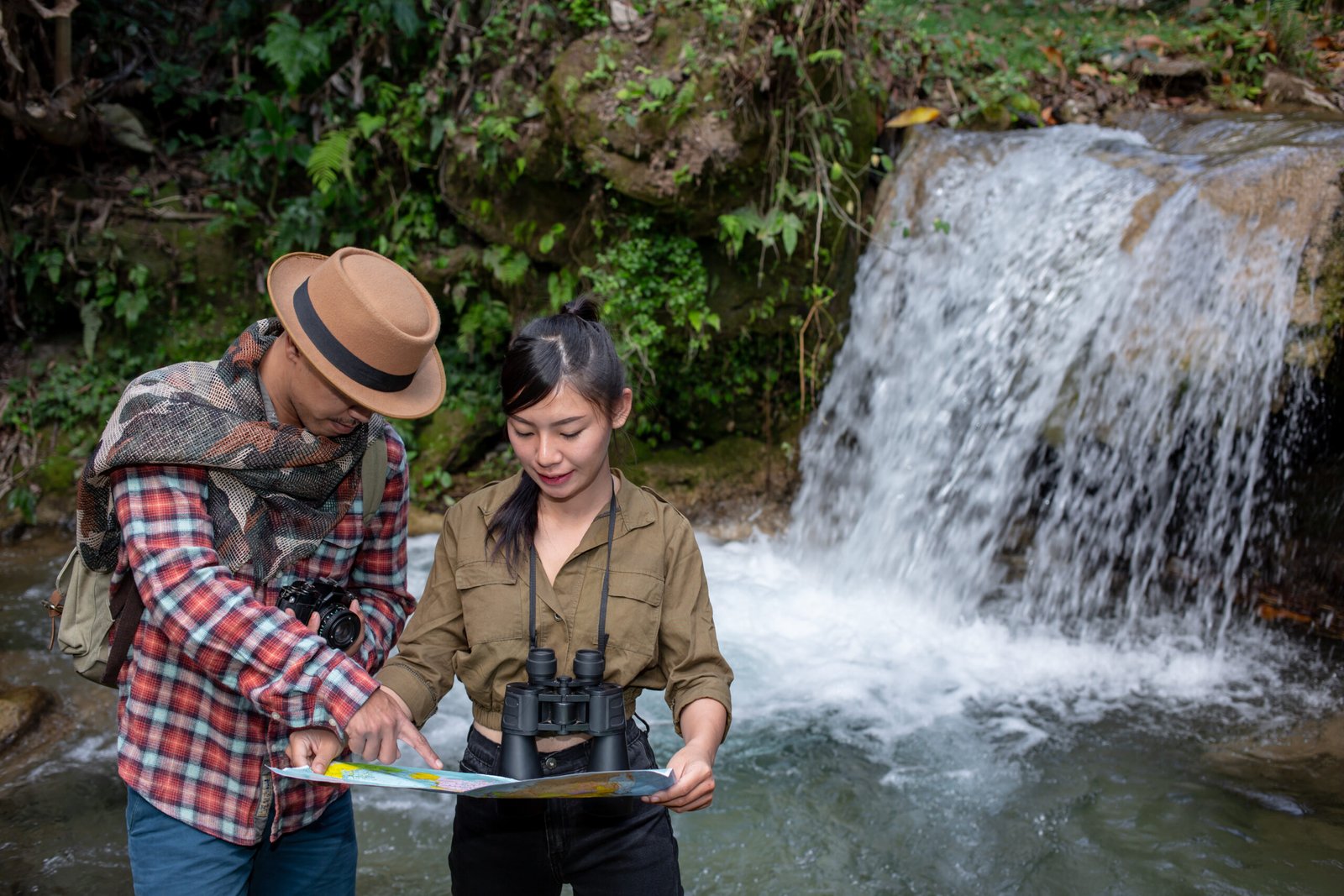
To begin with, West Bali National Park covers more than 19,000 hectares. It spans coastline, mangrove, savanna and rainforest in Bali’s quietest corner. Unlike most attractions on the island, however, you cannot just walk in. Every visitor needs a permit. Additionally, how you get one depends on whether you go solo or book through an operator. This guide covers how entry works, what fees to expect, and how the park is divided.
How Entry and Permits Work
First of all, the park is managed by Indonesia’s forestry authority, BKSDA. Therefore, there is no single ticket booth at one gate. Instead, entry points are scattered around the park’s edges. The main ones are Labuhan Lalang, Gilimanuk, Sumber Klampok, and Cekik near the main office. Consequently, each point issues its own permits for the activities allowed there.
In practice, this means the permit you need depends on your plans. For example, a boat crossing to Menjangan for bali island snorkeling needs a separate ticket from a savanna trek. Similarly, a mangrove paddle near Gilimanuk needs yet another. As a result, you cannot buy one permit for the whole park. Moreover, rangers check documentation at each checkpoint.
That said, paperwork is simple once you find the right counter. Just bring a passport or ID, fill out a short form, and pay in cash. However, the catch is that counters keep limited hours. On top of that, staff availability varies by season. Some activities, like night trekking, also need advance approval that cannot be arranged on the spot. Consequently, this is where most independent visitors run into delays.
Read more: Good Holiday Destinations: Couples or Solos
What Fees to Expect
Overall, fees are set by the government and stay fairly modest. Even so, costs add up once you include boat charter, guide fees and equipment. The ranges below are typical for foreign tourists. Nevertheless, it is worth confirming rates locally, since small adjustments happen from time to time.
| Fee Type | Typical Range (per person) | Notes |
|---|---|---|
| Park entrance ticket | IDR 150,000 to 250,000 | Varies by entry point and day of week |
| Local guide fee | IDR 100,000 to 300,000 | Mandatory for most trails and boat trips |
| Boat charter to Menjangan | IDR 500,000 to 1,000,000+ | Usually priced per boat, shared among the group |
| Camera or drone permit | IDR 50,000 to 150,000 | Drones need separate clearance and are restricted in some zones |
| Weekend or holiday surcharge | +20% to 50% | Applied at some counters on Saturdays, Sundays and public holidays |
Either way, cash is the safest bet. After all, card payments are unreliable this far from Bali’s tourist centers. So, bring small denominations, since change is not always available.
The Park’s Different Zones
Notably, West Bali National Park is not one uniform landscape. Instead, it splits into distinct zones. Each one, in turn, rewards a different kind of visit.
For instance, the coastal and marine zone is anchored by Menjangan Island. Here, the reef walls drop to visibility of 30 metres or more. As a result, it is a favorite for both snorkeling and menjangan island diving. Turtles, reef sharks and dense coral gardens sit just offshore. Furthermore, the same permit system protects this zone as the rest of the park.
Meanwhile, inland, the mangrove zone runs along the Gilimanuk coastline and around Banyuwedang Bay. There, traditional jukung boats glide through narrow channels. Specifically, early morning or late afternoon trips catch the most birdlife, including herons and kingfishers feeding at the water’s edge.
Further along, the savanna stretches around Teluk Brumbun and Tegal Bunder. Here, open grassland gives way to grazing deer, wild boar and green junglefowl. Accordingly, this is the zone most safari-style drives cover. Behind the savanna, meanwhile, dense rainforest climbs toward the park’s interior. It is home to black macaques, monitor lizards and, most notably, the critically endangered Bali Starling, found nowhere else in the wild.
Independent Visit vs Guided Tour
Admittedly, visiting independently is possible, but it takes patience. First, you need to identify the right entry point for your activity. Then, you also have to track down the correct permit counter and arrange a boat or vehicle separately. On top of that, hiring a guide on arrival is required too, since solo trekking is not permitted in most zones. Consequently, language barriers and inconsistent counter hours can turn a simple morning into a half-day of logistics.
By contrast, a guided west bali national park tour removes nearly all of that friction. Typically, permits, boat charter, guide fees and equipment are bundled into one price. As a result, everything is arranged before you even leave your hotel. Additionally, guides know which trail the wildlife favors that morning. They also know which tide suits a Menjangan crossing, and which counter is actually open that day. Ultimately, for most visitors, this trade-off in cost is worth the certainty it buys.
In the end, either way, the permit system protects a park that has stayed remarkably intact. While much of Bali has developed around it, this corner has not. Therefore, a little planning, or a good local guide, is all it takes to see it properly.
Read more: Best Time to Visit Menjangan Island for Snorkeling (Month-by-Month Guide)
Frequently Asked Questions
Yes. Permits are issued per entry point and per activity, so a boat trip to Menjangan and a savanna trek each require separate paperwork, even on the same day.
Rarely. Most counters only accept cash in rupiah, so bring enough small denominations before heading to any entry point.
For most trekking, mangrove and safari activities, yes. Independent walking is restricted in several zones, partly for visitor safety and partly to protect wildlife like the Bali Starling.