
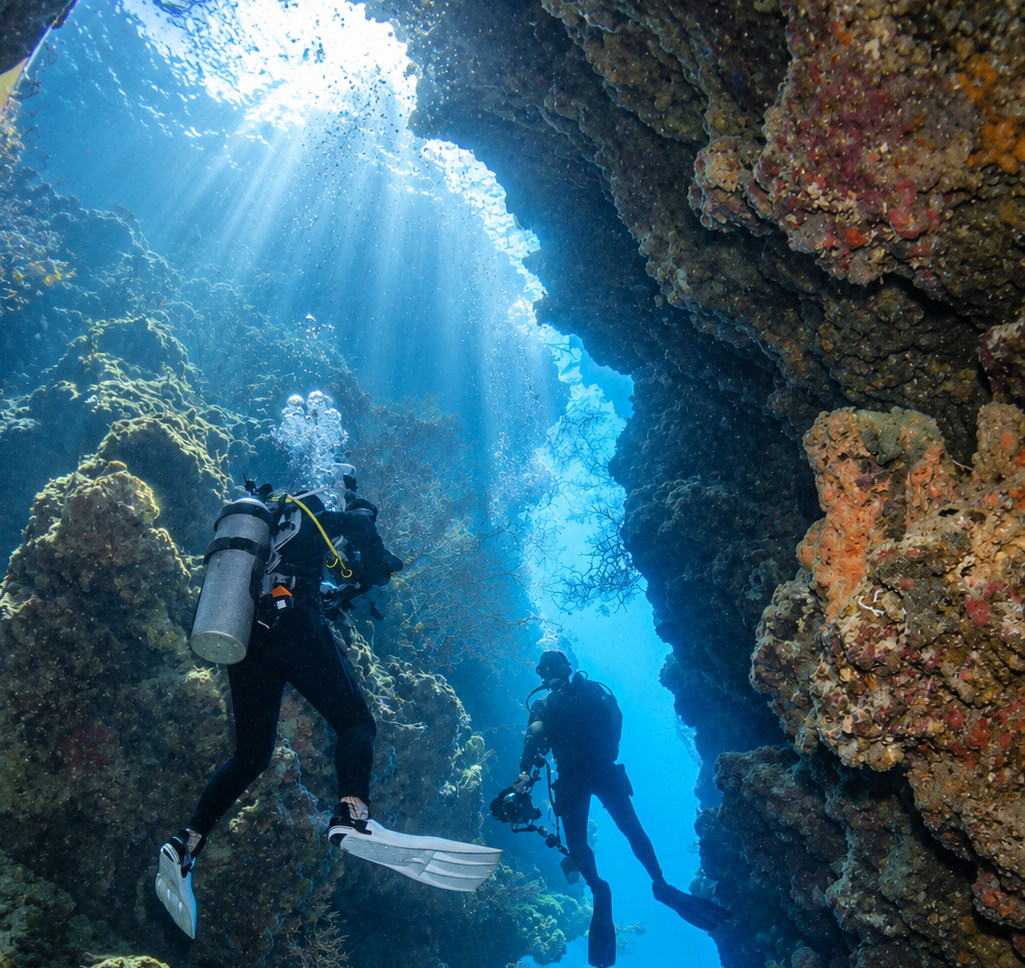
To begin with, not every wall around Menjangan Island suits every diver. Some sites drop straight into deep water with noticeable current. Others stay shallow, calm, and forgiving for beginners. This guide breaks down depth range and current strength across the island’s eleven main dive sites. As a result, you can match your certification level to the right wall before booking your day.
Why Site Selection Matters More Than Season
First of all, monthly visibility patterns get plenty of attention. However, depth and current vary just as much from site to site, regardless of the month. A calm, shallow site in July can still feel very different from a deep, current-swept wall nearby. Therefore, understanding each site’s specific conditions matters just as much as picking the right time of year.
Additionally, Menjangan’s dive sites sit close together, yet their profiles differ significantly. Some walls drop gently to 25 meters. Others plunge well beyond recreational limits. Consequently, dive operators typically match site choice to group certification level rather than treating the island as one uniform dive.
Beginner-Friendly Sites: Shallow and Calm
Notably, several sites around Menjangan suit newer divers particularly well. Pos I sits near the ranger station on the island’s southwest tip. Its sandy bottom and gentle coral slope make it a common choice for introductory dives and confidence-building sessions.
Similarly, Sandy Slope offers a wide, flat sandy area at shallow depth before gradually sloping toward deeper water. Currents here are typically mild or absent, which makes it a comfortable second dive for those still adjusting to buoyancy control. Meanwhile, Coral Garden follows a similar pattern, with healthy shallow reef structure and generally calm conditions throughout most of the year. For travelers who prefer to stay closer to the surface, snorkelling in bali around these same shallow reef tops offers a similar visual experience without the depth or current considerations divers face.
Intermediate Sites: Moderate Depth and Current
Moving further out, Pos II sits at the island’s southeastern point and remains one of the most visited sites overall. The wall here begins around 12 meters and drops to roughly 25 meters, with craggy structure rich in sponges and sea fans. Current at this site stays generally manageable, making it suitable for divers with a handful of logged dives.
Meanwhile, Anchor Wreck combines a shallow anchor resting at around 6 meters with a wall that continues well past 30 meters. Divers typically stay in the upper and mid-sections of this wall unless specifically pursuing deeper wreck exploration. Current here can pick up depending on tide movement, so timing matters more at this site than at the beginner-friendly options. This entire stretch of reef falls within the menjangan marine park, which protects both the shallow systems and the deeper walls, and is part of why conditions stay this consistent year after year.
Advanced Sites: Deeper Walls and Stronger Current
By contrast, several sites demand more experience due to depth, current, or both. Eel Garden, located at the island’s western tip, features a reef top around 10 meters that drops into a wall extending beyond recreational limits. Since this site sits in the channel between Menjangan and mainland Bali, current can strengthen noticeably, particularly during tide changes.
Dream Wall, positioned between Anchor Wreck and Sandy Slope, follows a similar profile. Its wall reaches roughly 40 meters, and while the shallow sections stay calm, deeper stretches can pick up current unpredictably. Therefore, this site suits divers comfortable managing depth and current simultaneously.
Temple Point and Bat Cave round out the advanced grouping. Both sites combine dramatic underwater scenery with a steady drift current, which typically allows divers to cover both locations in a single dive. Because of this current, less experienced divers are often steered toward calmer sites instead.
Full Site Comparison
Overall, seeing every site’s profile side by side makes planning easier. The table below summarizes depth range and current strength across all eleven locations.
| Dive Site | Depth Range | Current | Suggested Level |
|---|---|---|---|
| Pos I | 5 to 18 meters | Minimal | Beginner |
| Sandy Slope | 4 to 30 meters | Minimal | Beginner |
| Coral Garden | 5 to 20 meters | Light | Beginner |
| Pos II | 12 to 25 meters | Light to moderate | Intermediate |
| Anchor Wreck | 6 to 35 meters | Moderate | Intermediate |
| Cave Point | 10 to 25 meters | Moderate | Intermediate |
| Secret Bay | 8 to 22 meters | Light | Intermediate |
| Eel Garden | 10 to 40+ meters | Moderate to strong | Advanced |
| Dream Wall | 10 to 40 meters | Moderate to strong | Advanced |
| Temple Point | 10 to 30 meters | Strong drift | Advanced |
| Bat Cave | 10 to 30 meters | Strong drift | Advanced |
As shown above, depth alone doesn’t determine difficulty. Current strength plays an equally important role in deciding which wall suits your experience level on the day.
Choosing the Right Site for Your Certification
Ultimately, matching your certification to the correct site keeps the dive both safe and enjoyable. Open Water divers generally do best sticking to Pos I, Sandy Slope, and Coral Garden. Advanced divers, meanwhile, can confidently explore Eel Garden, Dream Wall, and the current-driven drift at Temple Point and Bat Cave.
For those splitting a day between the water and dry land, a Birding tour at West Bali National Park pairs naturally with a morning dive, since both activities depart from the same general area. Therefore, before booking your dive, confirm your certification level with the operator and ask which sites they plan to cover. This small step ensures the day’s conditions match what you’re actually prepared to handle.
Frequently Asked Questions
A1: Which Menjangan dive site is best for beginners?
Pos I is generally considered the most beginner-friendly, thanks to its sandy bottom, shallow depth, and minimal current.
A2: Yes. Current strength at several sites, particularly Eel Garden and Anchor Wreck, shifts with tide movement, so timing your dive matters.
A3: It depends on conditions that day and the diver’s comfort level. Many operators reserve these sites for Advanced Open Water divers or higher due to depth and current.