
To begin with, Menjangan gives first-timers two ways to meet the same reef. You can float at the surface with a mask and snorkel, or you can try a beginner dive with an instructor. Both trips start on the same boat. However, the view, the feeling and the cost change a lot. This guide compares snorkeling vs discovery scuba side by side, so you can pick the one that suits you.
Snorkeling vs Discovery Scuba: The Same Reef From Two Angles
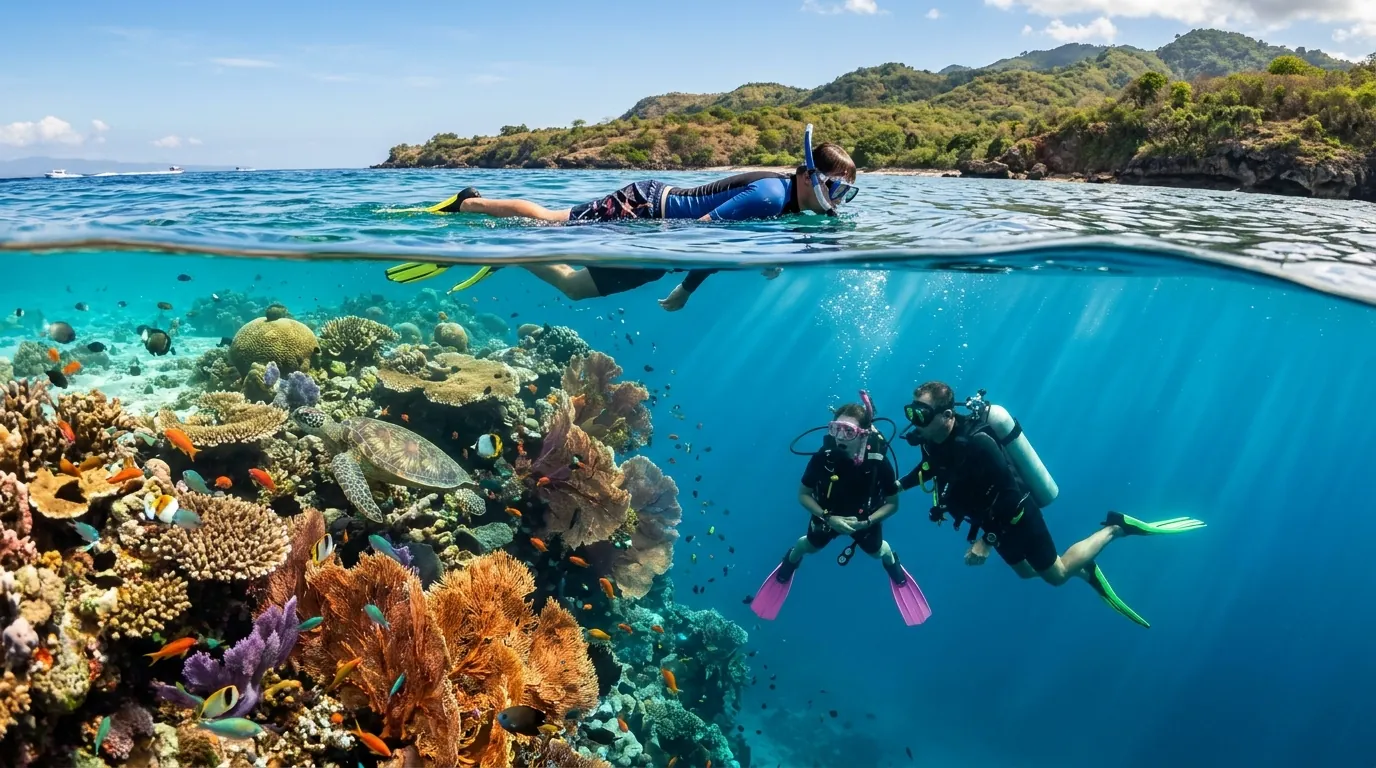
First of all, picture the reef as a building. Snorkelers look down at the roof from above. Divers, by contrast, walk along the front wall and look straight at the windows. At Menjangan, the reef top sits in shallow water, then drops into a steep wall. That shape makes the difference between the two activities very clear.
What You See With a Snorkel
From the surface, you see the reef top in bright, sunlit color. Hard corals, clownfish, parrotfish and butterflyfish sit just a few meters below. Turtles often pass underneath, and you can watch them breathe at the surface too.
Snorkeling also gives you the wide view. You can float over the edge of the wall and look down into deep blue. Still, the wall’s face and the life on it stay mostly out of reach.
What You See on a Discovery Scuba Dive
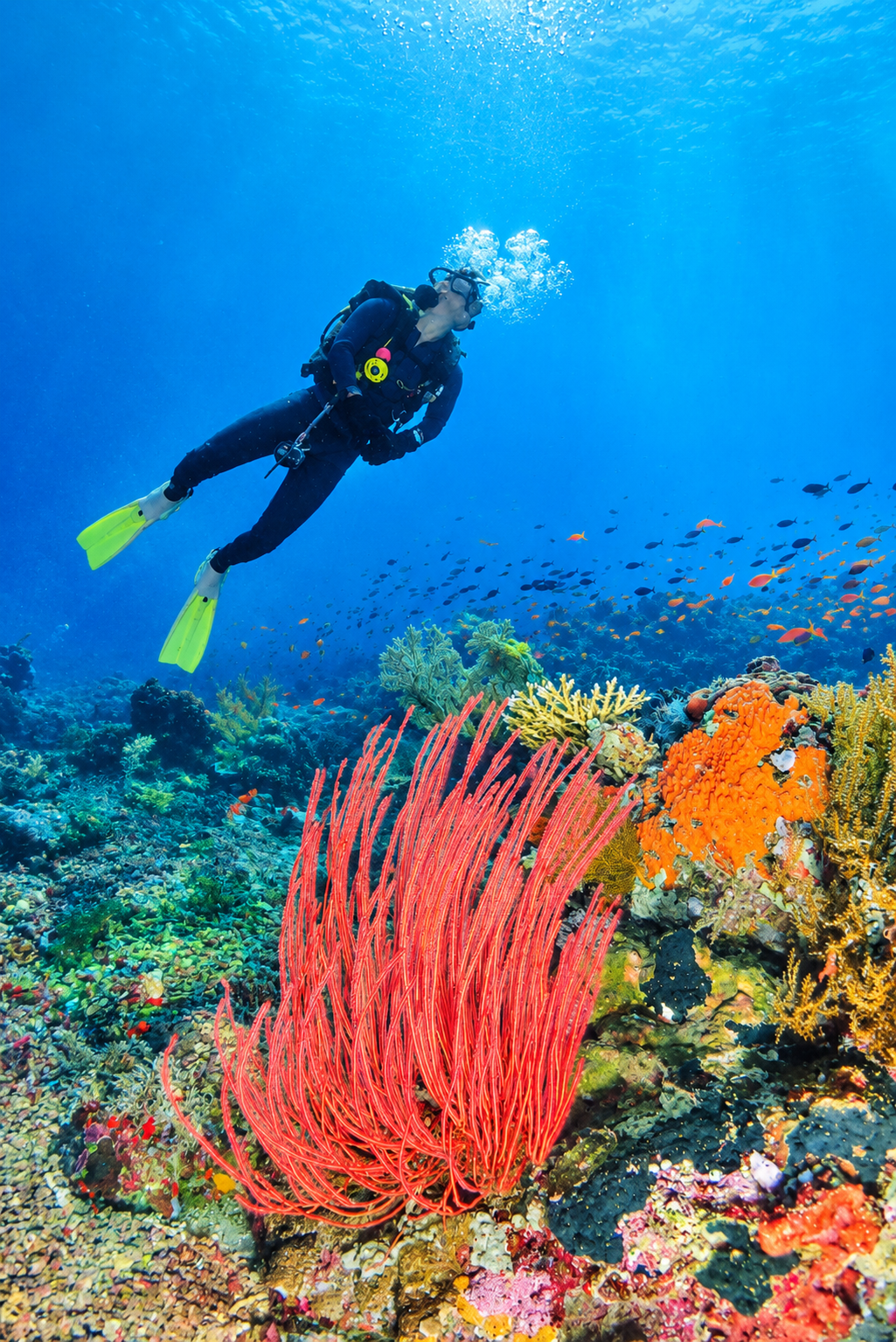
On a discovery dive, you drop below the surface and swim beside the reef. As a result, the wall turns into a scene at eye level. Large sea fans, sponges and soft corals cover its face. Small creatures hide in the cracks, and schools of fish move past you.
The colors look different too. Because water absorbs red light with depth, some corals look bluer at 10 meters. Your instructor may carry a torch to bring those colors back.
Depth and Time in the Water
Snorkelers stay at the surface, though some like to duck down a meter or two. Most trips include two sessions of 45 to 60 minutes. In total, that means plenty of reef time with breaks on the boat.
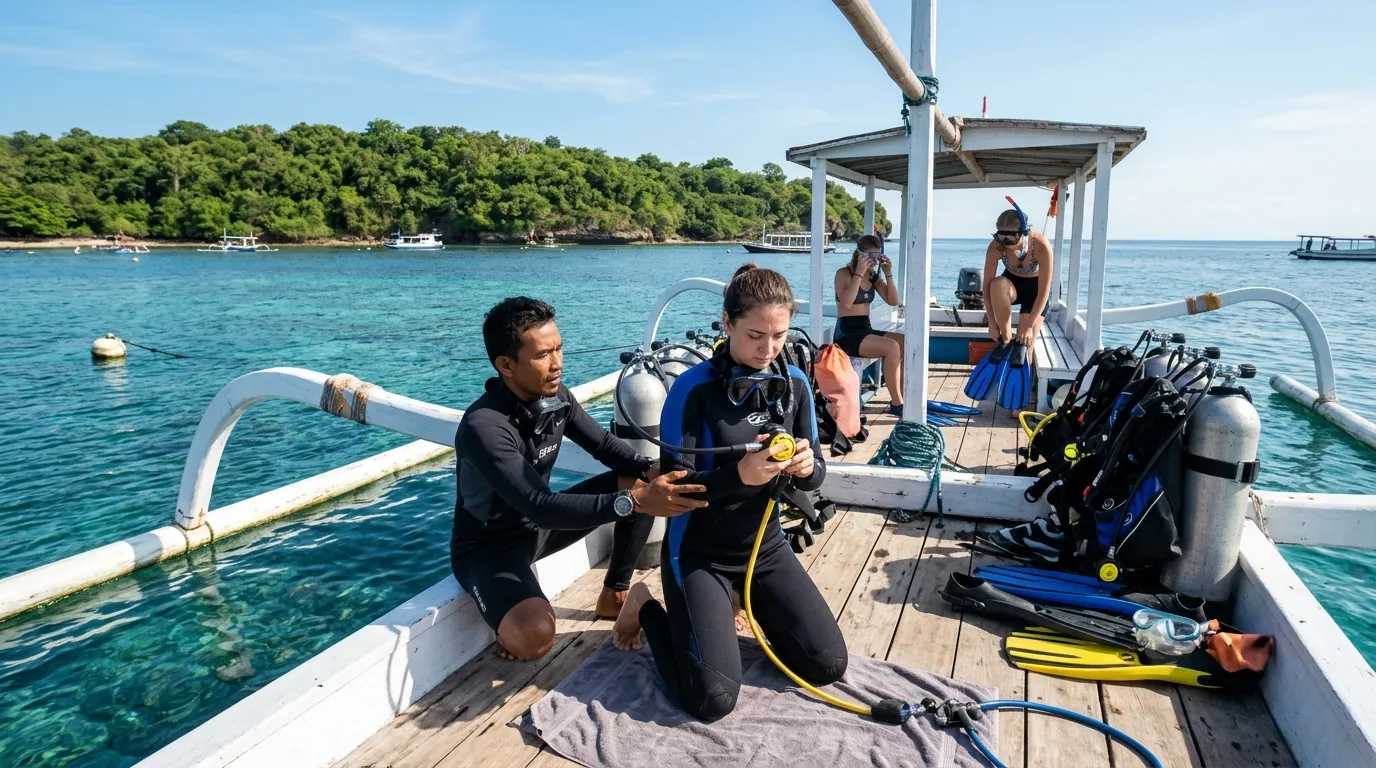
Discovery dives, meanwhile, usually go no deeper than about 12 meters. Before the dive, you get a briefing and practise a few skills in shallow water. The dive itself lasts roughly 40 to 50 minutes. Many visitors to menjangan island combine one dive with a snorkel later in the day.
Comfort and How It Feels
Snorkeling feels relaxed. You breathe through a tube, float in a life jacket if you like, and stop whenever you want. For this reason, it suits families, nervous swimmers and anyone who simply wants an easy day.
Scuba asks a little more. You wear a tank, a mask and a regulator, and you need to equalize your ears as you descend. On the other hand, many first-timers describe the moment they hover beside the wall as unforgettable. Your instructor stays with you the whole time, so you never dive alone.
Cost and What You Pay For
Snorkeling costs much less, since you need only basic gear and a guide. A discovery dive, however, costs several times more. That price covers an instructor, tanks, full scuba gear and a smaller group.
Think of it as paying for depth and personal attention. If budget matters most, snorkeling gives excellent value. Alternatively, if you want the full wall experience, a discovery dive delivers it.
Snorkeling vs Discovery Scuba at a Glance
For quick reference, the table below compares both options on the same reef.
| Factor | Snorkeling | Discovery Scuba |
|---|---|---|
| Depth | At the surface, looking down | Down to about 12 meters with an instructor |
| Time in the water | Two sessions of 45 to 60 minutes | One dive of about 40 to 50 minutes |
| Experience needed | Basic swimming, or a life jacket | None, but a short briefing and health form |
| Main view | Reef tops, colors, turtles from above | Wall face, sea fans, fish at eye level |
| Comfort | Relaxed and easy to stop | More gear, more focus, bigger wow factor |
| Cost | Lower | Several times higher |
| Flying afterward | No limit | Wait at least 12 hours |
Which One Suits You?
Next, match the activity to your group:
- Choose snorkeling if you travel with children, feel nervous in water, or want a relaxed day
- Pick a discovery dive if you want to see the wall up close and feel ready for something new
- Try both if you have a full day, with a morning dive and an afternoon snorkel
For a closer look at the best surface spots, read our guide to Snorkeling Menjangan Island.
Final Thoughts on Snorkeling vs Discovery Scuba
Ultimately, both options show you the same healthy reef from two very different angles. Snorkeling gives you light, color and an easy pace. A discovery dive, by contrast, puts you face to face with the wall. If the dive hooks you, the next step is scuba diving Menjangan Island with a full certification course.
Frequently Asked Questions
Do I need a license for a discovery scuba dive?
No. A discovery dive suits people with no experience. You complete a short briefing and a health form, and an instructor stays with you underwater.
Is snorkeling at Menjangan good enough without diving?
Yes. The reef tops sit in shallow, clear water, so snorkelers see bright coral, reef fish and often turtles.
Can I fly after a discovery dive?
Wait at least 12 hours before you fly. Snorkeling, on the other hand, has no flying limit.