

local checklist
the national park
2.5h and 6h
best start time
Four habitats, one short drive apart
West Bali National Park holds mangrove forest, monsoon forest, savanna and lowland rainforest inside one boundary. Each vegetation type carries a different food supply — different fruit, different insects, different fish — so each one holds a different set of birds.
Walk from the mangrove edge at Banyuwedang Bay out to the salt pond and you cross three of those habitats in under an hour. The park is home to more than 160 recorded species, including the critically endangered Bali Myna, and it is one of the best places in Bali for a short birding trip that still produces a serious list.

Mangrove forest
Kingfishers, herons and egrets working the tidal channels. Best on a falling tide.
Monsoon forest
Drongos, treepies, babblers and bulbuls. Dry, open canopy — easier viewing than rainforest.
Savanna
Junglefowl, shrikes and starlings on open ground. Bali Myna territory around Tegal Bunder.
Salt pond & shoreline
Migratory waders from September to April — plovers, stints, sandpipers and terns.
Two routes, both starting at first light
Led by a local guide who walks these tracks every week. Binoculars and a spotting scope come with the trip, and you set the pace.
Half morning
2.5 hours- Banyuwedang Bay — mangrove edge and tidal flats
- Salt pond — waders, terns and egrets
- Around 25 species on an average morning
The short option. Enough time for the mangrove and the water birds, and you are back before the heat arrives. Good if you are diving Menjangan later the same day.
Ask about this tripFull morning
6 hours- Banyuwedang Bay — mangrove edge and tidal flats
- Tegal Bunder — monsoon forest and savanna
- Salt pond — waders, terns and egrets
- Around 40 species on an average morning
Adds the forest and savanna at Tegal Bunder, which is where the Bali Myna, the treepies and the forest babblers are. The route birders come for.
Ask about this tripRegulars on the Tegal Bunder route
None of these are rarities here. On a full morning in good conditions all three are realistic, and the first two are often the highlight of the walk.
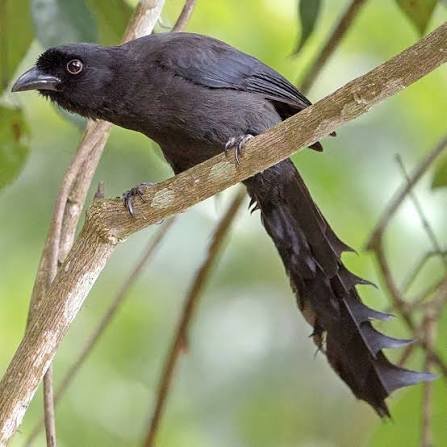
Racket-tailed Treepie
Crypsirina temia
Monsoon forest · Tegal Bunder
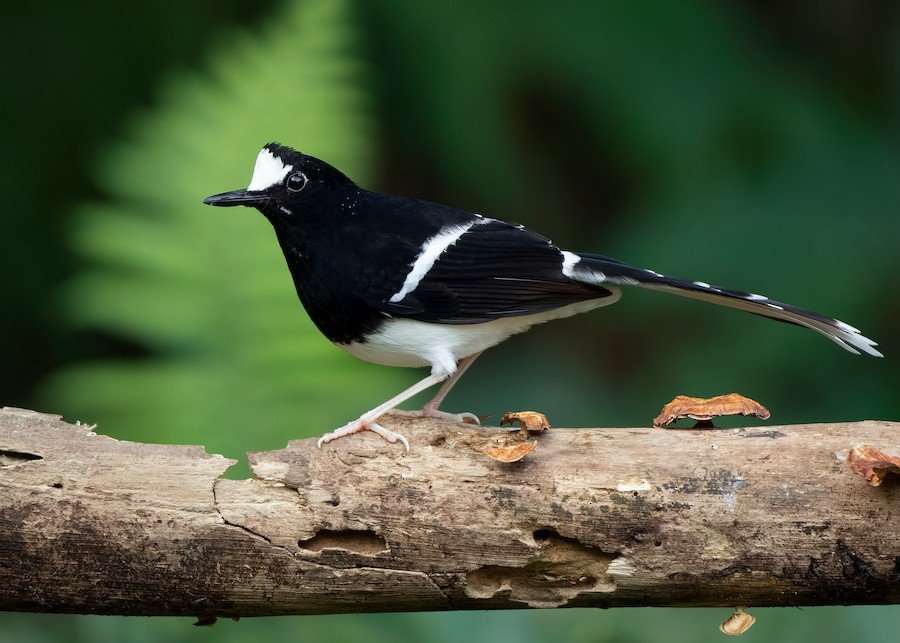
White-crowned Forktail
Enicurus leschenaulti
Shaded stream edges · early morning
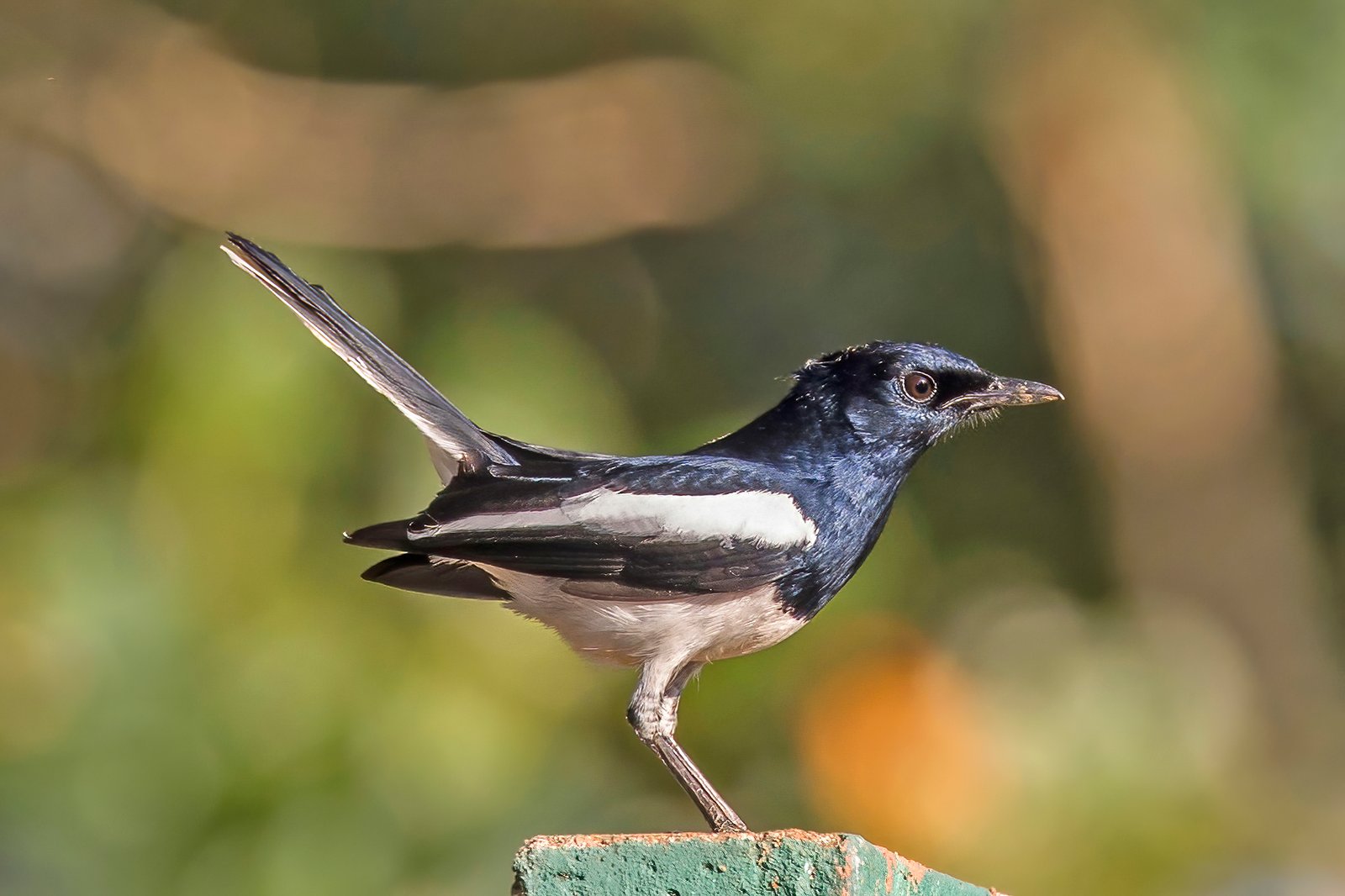
Oriental Magpie-Robin
Copsychus saularis
Forest edge and savanna · sings at dawn
Birds move at the ends of the day
Activity drops sharply once the sun is high. From roughly 10:00 to 15:00 most species are quiet and out of sight, so both our trips are built around the early window. If you can only do one thing, start at first light.
Pack light, walk quiet
- FootwearClosed shoes with grip. The mangrove edge is soft and the salt pond track can be wet.
- ClothingLong sleeves in muted colours. Bright shirts push birds off the track ahead of you.
- OpticsWe supply binoculars and a scope. Bring your own if you prefer your glass.
- Camera300mm and up is realistic for the forest birds. The waders at the salt pond come closer.
- OtherInsect repellent, water, sun hat. Coffee before you leave — we start early.
- SeasonMigratory waders are present roughly September to April. Resident species are year-round.
82 species identified on our routes
Search it, filter it by family, tick what you see. Nothing is saved when you leave the page — screenshot it or print it before you go.
Nothing on the list matches that. Try a shorter word.
Songbirds & perching birds
28Starlings & mynas
5Sunbirds, flowerpeckers & munias
8Raptors
7Herons, egrets & storks
9Shorebirds & waders
16Seabirds & terns
4Waterfowl & ground birds
5This is what our guides have identified on these two routes, not the full park list — the national park has more than 160 recorded species. Sightings vary with season, tide and weather, and nothing here is guaranteed on any given morning.
Common questions
Both trips start at first light, around 05:30 to 06:00 depending on the month. Birds are most active in the first few hours after sunrise and again in the late afternoon, so the early start makes a real difference to what you see.
The Bali Myna is critically endangered and sightings are never guaranteed. Your best chance is the 6-hour route, which covers Tegal Bunder where the release and monitoring area sits. Your guide will know where birds have been seen recently.
No. The guide handles the identification and gets birds in the scope for you. If you are experienced, tell us in advance and we will pitch the walk differently — target species, slower pace, more time at the salt pond.
Binoculars and a spotting scope are provided. Bring your own optics if you prefer, and bring a long lens if you plan to photograph — 300mm and up is realistic for the forest species.
Resident species are present all year. Migratory shorebirds pass through the salt pond and shoreline roughly between September and April, which is when the wader list is at its longest. The dry season, around April to October, gives the most reliable walking conditions.
Yes, and the 2.5-hour trip is designed for it. You finish mid-morning with time to get out to Menjangan Island the same day. Message us and we will line up both.