
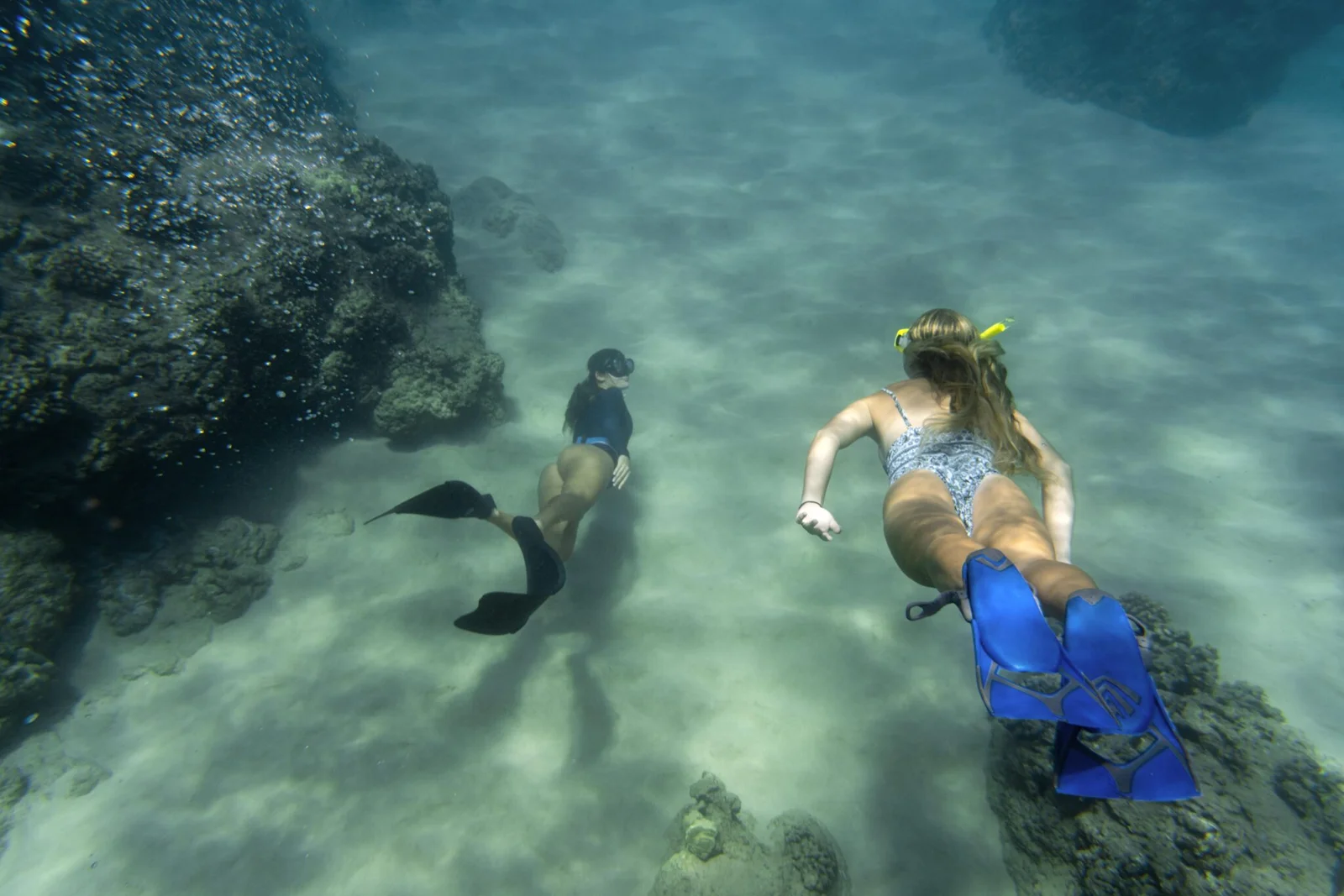
Menjangan vs Nusa Penida underwater is a comparison many travelers make when planning a snorkeling or diving trip in Bali. Choosing between the two often comes down to a simple trade-off: do you prefer calm, pristine coral gardens or dramatic underwater landscapes with pelagic marine life?
Both Menjangan Island in the north and Nusa Penida off the southeastern coast offer world-class marine experiences. However, their underwater environments, water conditions, and marine biodiversity are significantly different.
This head-to-head comparison will help you decide which destination best matches your experience level, interests, and expectations for an unforgettable underwater adventure in Bali.
At a Glance: Key Differences
| Feature | Menjangan Island | Nusa Penida |
| Primary Attraction | Healthy wall reefs, macro life, high visibility | Manta rays, Mola Mola (oceanic sunfish), dramatic topography |
| Water Conditions | Extremely calm, minimal current | Strong, unpredictable currents, cold upwellings |
| Visibility | Typically 20–40 meters | 10–20 meters (variable due to plankton) |
| Best Suited For | Beginners, relaxed snorkeling, macro photography | Experienced divers, adventure seekers, pelagic lovers |
| Coral Health | Exceptional hard and soft coral cover | Mixed; heavy focus on open-water marine encounters |
1. Underwater Topography & Coral Health
Menjangan: Sheltered Reef Walls and Pristine Gardens
Located within the protected West Bali National Park, Menjangan Island is famous for its vertical wall reefs that drop down to 30–60 meters. Because the island sits in a sheltered bay, surface conditions are almost always flat and calm.
The coral health here remains among the best in Bali. Divers and ocean enthusiasts frequently explore the shallow reef flats around Pemuteran Menjangan, where shallow gardens transition seamlessly into deep drop-offs filled with sea fans, barrel sponges, and vibrant soft corals.
Nusa Penida: Rugged Limestone Slopes
Nusa Penida presents a much wilder aquatic landscape. Carved by strong ocean currents passing through the Lombok Strait, the reefs here feature sloping limestone beds, dramatic rock formations, and deep ocean channels.
While coral coverage is present, the main draw here is the sheer scale of the underwater terrain rather than delicate coral structures.
2. Marine Life Encounters
Menjangan: Biodiversity and Peaceful Reef Species
If you enjoy spotting colorful reef fish, sea turtles, hawksbill turtles, and garden eels, Menjangan offers an effortless snorkeling experience in calm, crystal-clear waters.
You can spend hours observing marine life, including small macro critters, without fighting strong currents. It’s widely regarded as one of the best destinations for a relaxing snorkeling tour North Bali.
Nusa Penida: Big Pelagic Action
Nusa Penida is world-renowned for big marine animals:
-
Reef Manta Rays: Present year-round at sites like Manta Point and Manta Bay.
-
Mola Mola (Oceanic Sunfish): Typically spotted during the cooler water months between July and October.
While seeing these ocean giants is thrilling, it requires patience and a high tolerance for cooler water temperatures, which can drop to 18–20°C (64–68°F) due to deep ocean upwellings.
3. Water Conditions and Skill Level
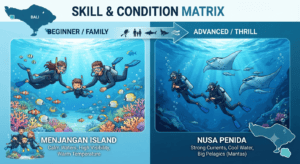
Navigating Currents and Visibility
-
Menjangan: The water temperature stays warm year-round (around 28–29°C), with gentle or non-existent currents. The clear waters make it easy for beginners, families, and photographers to enjoy the environment safely.
-
Nusa Penida: Currents can change rapidly from gentle to down-currents. It demands good buoyancy control and comfort in open-ocean conditions, making it less suitable for absolute beginners or young children.
Which Island Should You Choose?
-
Choose Menjangan Island if you want crystal-clear visibility, serene wall dives, healthy corals, and a peaceful day on the water without battling currents. It remains a highlight for overall snorkeling in Bali when looking for a stress-free reef exploration.
-
Choose Nusa Penida if your main goal is swimming alongside Manta Rays or Mola Mola and you are confident handling choppy water and strong thermal currents.
FAQ
Q: Is Menjangan or Nusa Penida better for first-time snorkelers?
A: Menjangan Island is significantly better for beginners. Its waters are warm, protected from swell, and usually current-free, allowing first-timers to float comfortably over colorful wall reefs.
Q: Can I see Manta Rays at Menjangan Island?
A: Manta Rays are extremely rare at Menjangan Island. Menjangan is known for reef fish, sea turtles, and coral gardens, whereas Nusa Penida is the primary spot in Bali to see Manta Rays.
Q: How far is Menjangan Island from Southern Bali?
A: Menjangan is located off the northwest coast of Bali. Driving from southern hubs like Seminyak or Canggu takes approximately 3.5 to 4.5 hours, which is why many visitors choose to stay overnight in Pemuteran or Lovina before taking a boat out to the island.