
Pemuteran Snorkeling Marine Life: 10 Reef Creatures to Spot in Pemuteran Bay
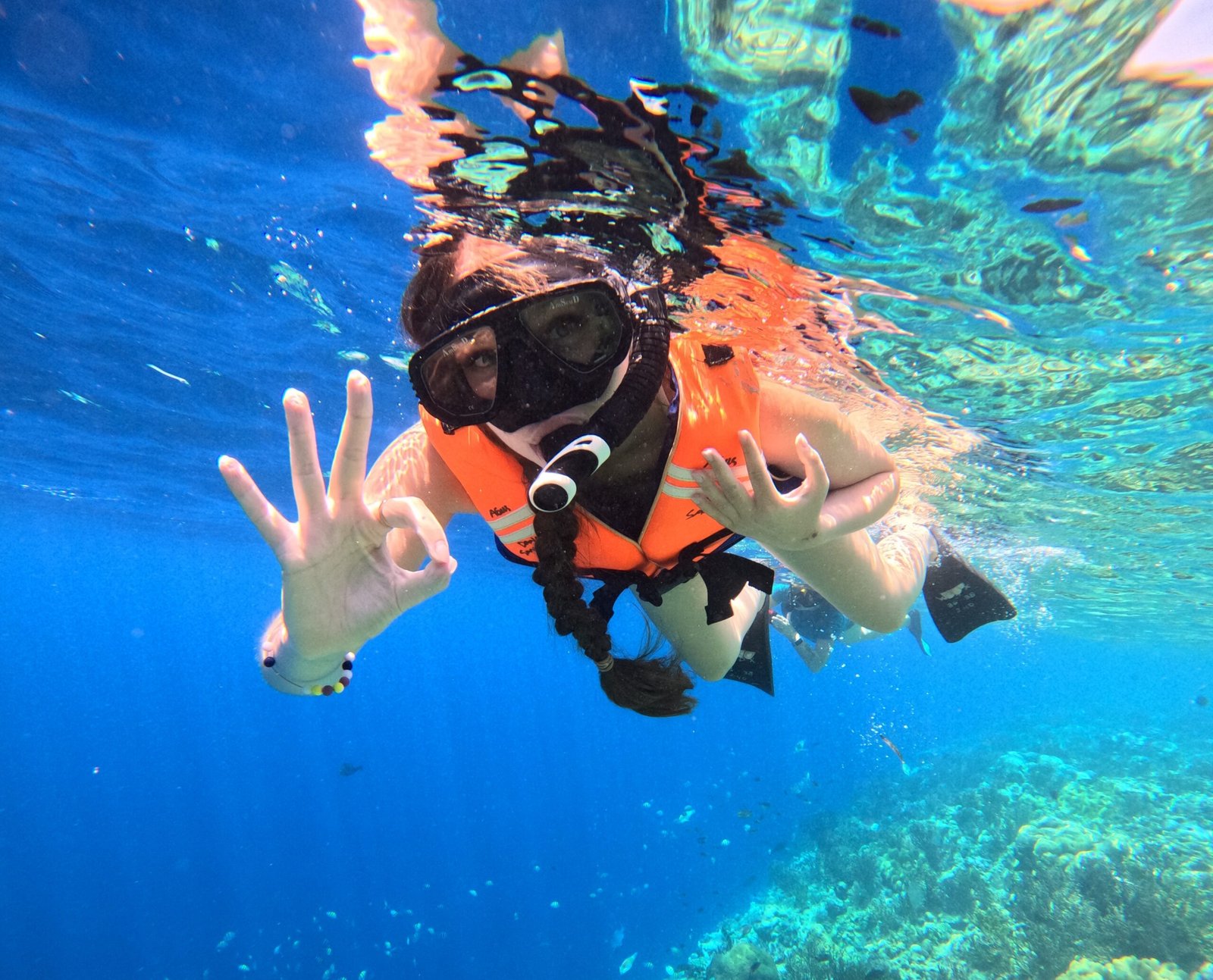
What will you see when you put your face in the water at Pemuteran? Quite a lot. The reef starts a few meters from the beach, the water stays calm, and the shallows teem with color. In fact, Pemuteran snorkeling marine life ranges from bright clownfish to cruising turtles and tiny sea slugs. This guide introduces 10 creatures, explains where each one lives, and shows you how to spot them.
- Reef a few meters from shore
- Calm, shallow water
- 10 creatures to spot
- Best at sunrise
Why the Bay’s Shallows Are So Full of Life
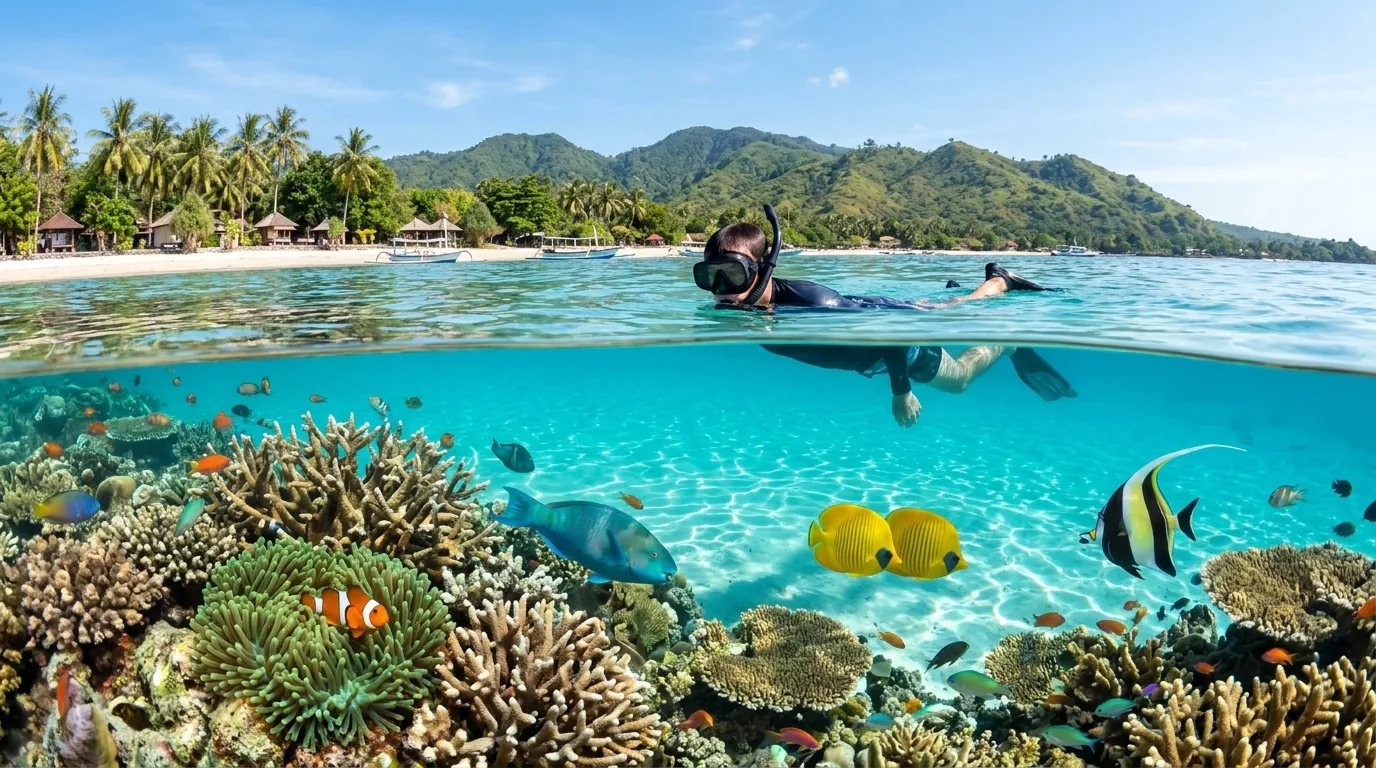
Pemuteran Bay sits in a sheltered spot on Bali’s northwest coast. As a result, gentle currents bring food, and the shallow reef gives small animals plenty of places to hide. Local conservation teams also restore the reef with Biorock structures and coral nurseries, so young fish find shelter close to shore.
Because of this, you do not need a boat to meet most of the animals below. However, sightings change with the season and tide, so treat every tip as a good bet, not a promise.
Reef Fish You’ll See on Most Swims
First of all, a handful of reef fish appear on almost every swim:
- Clownfish: they guard their anemones on the reef slope, usually 1 to 4 meters deep. Since they rarely leave home, they are easy to find.
- Parrotfish: these fish bite coral across the shallow reef flat, and you can often hear them crunching. Also, look for their bright blue and green bodies.
- Butterflyfish and Moorish idols: these graceful fish swim in pairs around healthy coral. As long as you stay near the upper reef, you will meet them quickly.
- Lionfish: they drift under overhangs and in shaded crevices, so finding one takes a little effort. Keep your hands away, because their spines carry venom.
Turtles, Cuttlefish and Bigger Visitors
Meanwhile, the sandy gaps and seagrass hold larger animals:
- Green and hawksbill turtles: they graze near seagrass and sandy gaps between coral heads. When you spot one, keep a respectful distance and scan the open areas slowly.
- Cuttlefish: these shapeshifters hover over sand and rubble near the reef edge. Because they change color in seconds, watch for odd shapes that seem to move.
- Bluespotted ribbontail rays: they rest under coral ledges beside sandy patches. Once you spot the outline, their blue dots give them away.
If you want to see turtles alongside deeper reef walls, a menjangan trip also adds another chance to meet them.
Small Creatures Worth Slowing Down For
Finally, some of the best finds are also the smallest:
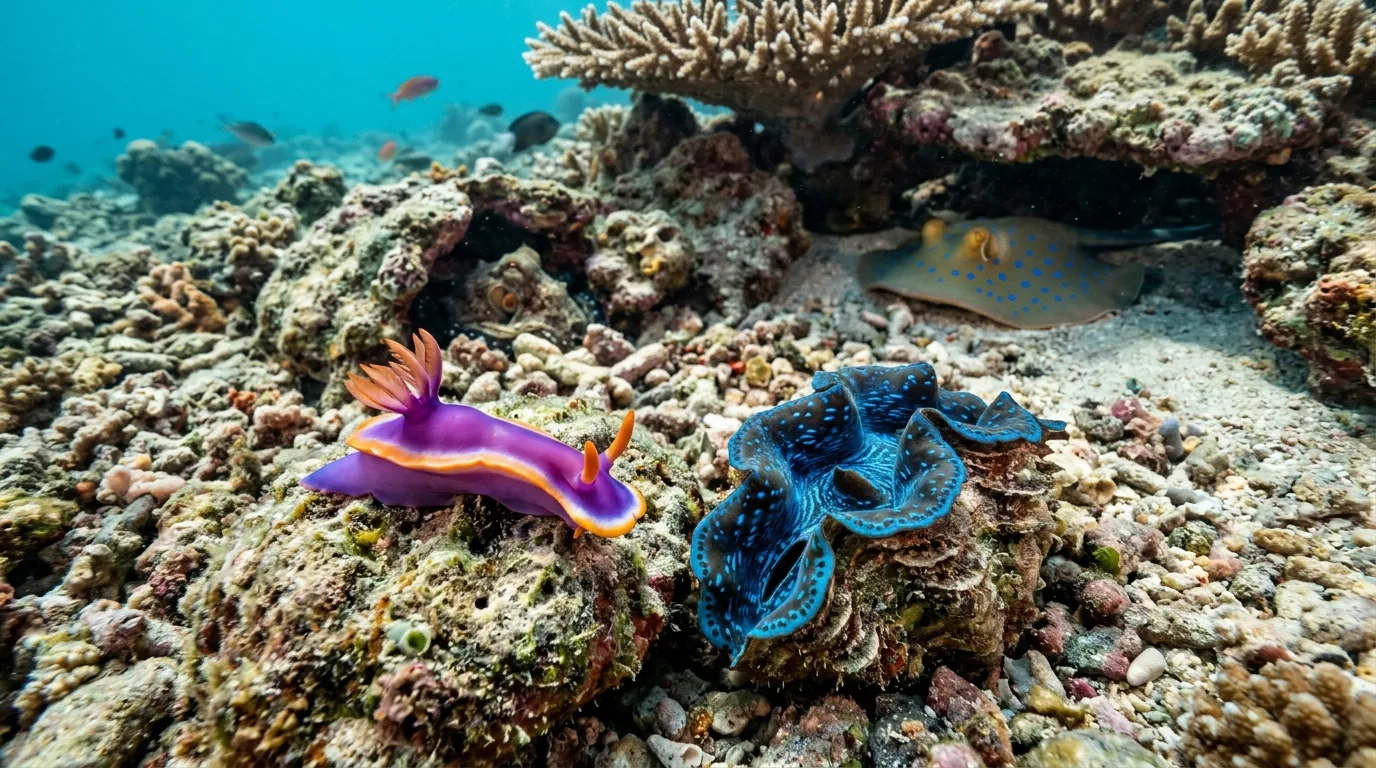
- Nudibranchs: these tiny sea slugs crawl over coral rubble and rocky patches. They are hard to find, so float slowly and look closely.
- Giant clams: they sit on rocky patches and show wavy blue or purple lips. In fact, they never move, which makes them an easy find.
- Octopus: an octopus blends with rock and rubble. To find one, look for small caves, piles of shells, and a single watchful eye.
Best Time of Day for Pemuteran Snorkeling Marine Life
In general, early morning wins for most animals. At that hour, the water stays flat, the visibility peaks, and turtles, octopus, and clownfish stay active. Midday sun, by contrast, lights up giant clams, rays, and nudibranchs. Late afternoon then suits lionfish, which start to hunt as the light fades.
A guide also makes a big difference here. Join a guided pemuteran snorkeling session, and your guide will point out the animals that hide best.
Pemuteran Snorkeling Marine Life at a Glance
For quick reference, the table below shows where to look for each creature and when.
| Creature | Where | How Easy to Spot | Best Time |
|---|---|---|---|
| Clownfish | Anemones on the reef slope | Easy | Morning |
| Parrotfish | Shallow reef flat | Easy | Mid-morning |
| Butterflyfish | Upper reef, around coral | Easy | Before noon |
| Lionfish | Overhangs and crevices | Moderate | Late afternoon |
| Turtles | Seagrass and sandy gaps | Moderate | Early morning |
| Cuttlefish | Sand and rubble near the reef edge | Moderate | Morning |
| Ribbontail rays | Ledges beside sand | Moderate | Midday |
| Nudibranchs | Coral rubble | Hard | Midday |
| Giant clams | Rocky patches | Easy | Midday |
| Octopus | Small caves and rubble | Hard | Early morning |
As shown above, most creatures are easiest to find before noon, while a few reward a later swim.
Final Thoughts on Pemuteran Snorkeling Marine Life
Above all, Pemuteran rewards slow swimmers. For the best experience, follow a few simple habits:
- Float quietly and kick gently
- Never touch the reef or chase an animal
- Wear reef-safe sunscreen so the coral stays healthy
- Snorkel at sunrise, rest through the heat, then return for a second look later
Between swims, you can also explore the quiet lanes and rice fields. A ride through the Pemuteran Bali countryside shows you village life that most visitors miss, and this pemuteran bali cycling trip guide covers the details.
Frequently Asked Questions
What is the best time to snorkel in Pemuteran Bay?
Early morning works best. The water stays calm, visibility peaks, and turtles, octopus, and clownfish stay active.
Do I need to be an experienced swimmer?
No. The reef sits close to shore, and the water stays shallow and calm in many areas. Wear a life jacket if you feel unsure, and tell your guide about your comfort level.
Can I see turtles every day?
Not always. Turtles visit the bay throughout the year, but sightings depend on the tide, the weather, and luck. Go early and scan the seagrass and sandy patches to improve your chances.
Can I snorkel straight from the beach in Pemuteran?
Yes. The reef starts only a few meters from shore, so many spots, including the Biorock structures, are reachable without a boat.
Is it safe to touch lionfish or other reef animals?
No. Lionfish spines carry venom, and touching any animal or coral can harm it. Instead, always observe from a respectful distance.