
What Changes on Land Between Dry Season and Wet Season in West Bali National Park?
To begin with, most seasonal advice for Bali focuses on the sea. However, the land side of the park changes just as much through the year. Trails, trees, animals and birds all follow the rain. This guide explains how West Bali National Park seasons shape a trek, from the paths underfoot to what you should pack.
How West Bali National Park Seasons Work
First of all, the park has two main seasons. The dry season usually runs from April to October. By contrast, the wet season runs from November to March. West Bali sits in the island’s drier corner, so even the wet months bring less rain than the central highlands.
Rain rarely falls all day. Instead, short heavy showers tend to arrive in the afternoon, while mornings often stay bright. As a result, you can trek in either season with the right timing.
Trails in the Dry and Wet Season
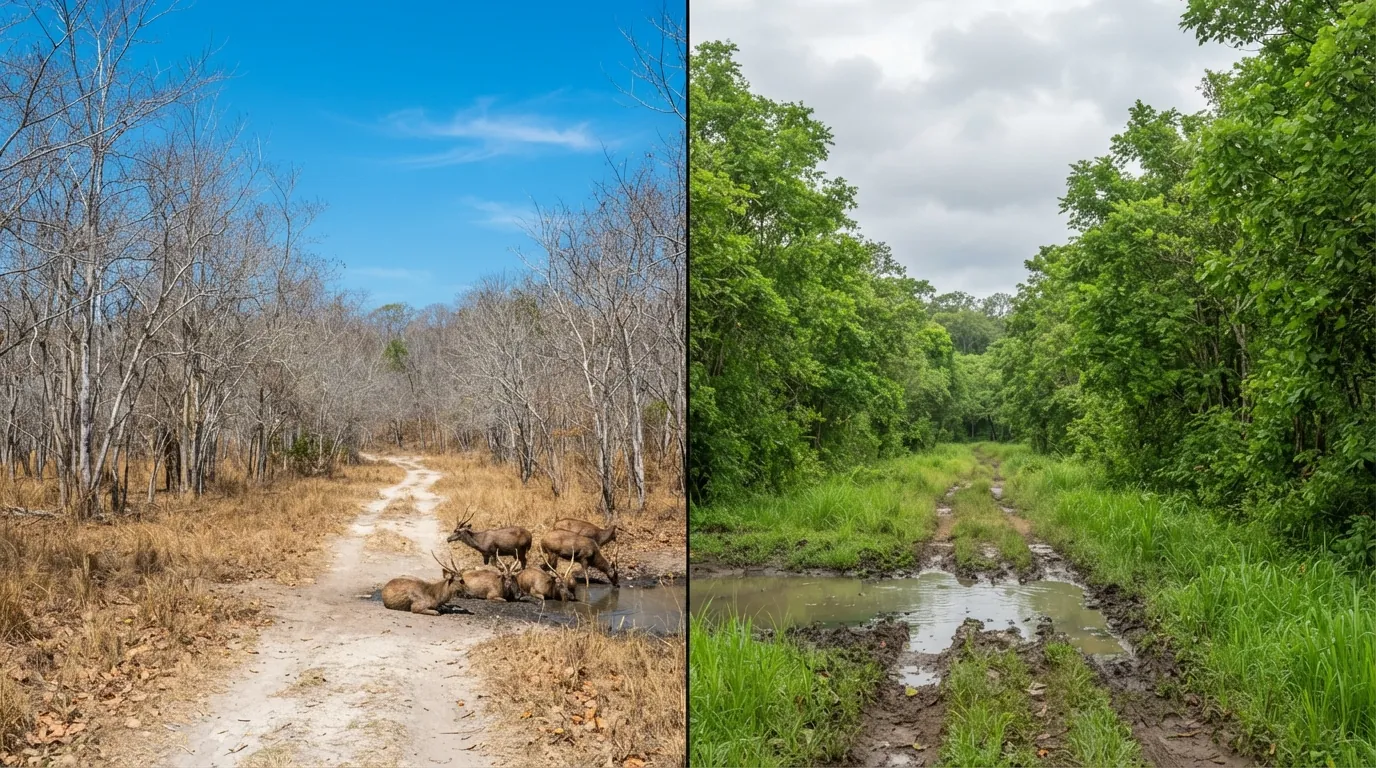
In the dry months, trails stay firm and dusty. Walking feels easy, and guides can reach most areas without trouble. Loose gravel on slopes is the main thing to watch.
After the rains begin, the same paths can turn muddy and slippery. Small streams fill up, and some low sections may hold water for a day or two. Your guide may therefore switch to a drier route, so stay flexible with your plans.
How the Vegetation Changes
Much of the park grows dry monsoon forest. Many of its trees drop their leaves in the dry season to save water. Consequently, the forest looks open and pale, and the savanna turns golden brown.
Once the rain returns, the scene changes fast. New leaves appear within weeks, the grass turns bright green, and the canopy closes overhead. The forest feels cooler and shadier, though it also hides animals more easily.
Animal Behavior Through the Year
During the dry season, water becomes scarce. For this reason, deer, wild boar and monkeys gather near the remaining pools and streams. Bare trees also make them easier to see, so many visitors spot more wildlife in these months.
In the wet season, water spreads across the park, and animals move more freely. Sightings take more patience. On the other hand, the green landscape makes a beautiful backdrop, and young animals often appear after the rains.
Bird Activity by Season
Birds stay active all year, but their behavior shifts. In the dry season, open branches make perching birds easier to find. Mornings bring the most movement before the heat builds.
With the first rains, many birds start to sing more and prepare to breed. Meanwhile, migrant shorebirds arrive on the coast from around September to April. A Birding tour at West Bali National Park helps you find the right habitat for each season.
Trekking Comfort and Weather
Dry season mornings feel pleasant, but middays get hot under a thin canopy. Start early and finish your walk by late morning. The wet season, meanwhile, feels more humid, and mosquitoes become more common.
In both seasons, mornings give the best conditions. Many visitors to the menjangan west bali national park plan a short trek at dawn and spend the rest of the day near the water.
What to Pack for Each Season

Pack for the season you visit, plus a few basics for both:
- Dry season: light breathable clothing, a wide hat, sunscreen and at least two liters of water
- Wet season: a light rain jacket, quick-dry clothing, insect repellent and a dry bag for your phone
- All year: sturdy shoes with good grip, binoculars and a small first aid kit
If you plan to add West bali national park snorkeling to your trip, bring a rash guard and reef-safe sunscreen too.
West Bali National Park Seasons at a Glance
For quick reference, the table below compares the land side of each season.
| Feature | Dry Season (April to October) | Wet Season (November to March) |
|---|---|---|
| Trails | Firm, dusty and easy to walk | Muddy and slippery after rain |
| Forest | Open canopy, many bare trees | Thick, green and shady |
| Savanna | Golden grass, wide views | Fresh green grass |
| Animals | Gather near water, easier to spot | Spread out through the forest |
| Birds | Easy to see in open trees | More song, migrants on the coast |
| Comfort | Hot middays, cool mornings | Humid, with short heavy showers |
| Best hours | 6:00 to 10:00 AM | Early morning, before afternoon rain |
Final Thoughts on West Bali National Park Seasons
Ultimately, both seasons have their own appeal. The dry months bring firm trails and easier wildlife spotting. In turn, the wet months bring green forest, birdsong and fewer visitors. Choose the season that suits your style, start early, and pack for the weather.
Frequently Asked Questions
Is the dry season better for trekking in West Bali National Park?
For most visitors, yes. Trails stay firm, and bare trees make animals easier to spot. Start early, though, since middays get hot.
Can I still trek in the wet season?
Yes. Rain usually falls in short afternoon showers, so morning treks often stay dry. Your guide may switch routes if a trail turns muddy.
When are birds most active in the park?
Birds stay active all year, especially in the early morning. The start of the wet season brings more song, while migrant shorebirds visit the coast from around September to April.