
Wall Diving at Menjangan vs Muck Diving at Secret Bay: Two Totally Different Kinds of North-West Bali Dive
To begin with, north-west Bali offers two dive styles that feel like different worlds. Menjangan gives you steep coral walls and deep blue water. Secret Bay, near Gilimanuk, gives you a shallow, sandy bottom full of strange little creatures. This guide compares wall diving vs muck diving on what you see, the skills you need, photography and how to fit both into one trip.
Wall Diving vs Muck Diving: Two Styles, One Coast
First of all, the two sites sit only a short drive apart. Menjangan Island lies off the north coast inside West Bali National Park. Secret Bay, meanwhile, sits at the western tip of the island beside the Gilimanuk ferry port.
Despite that short distance, the dives could not look more different. Wall diving is about the big scene, where you look out across a vertical reef into open water. Muck diving, by contrast, is about the tiny details, so you look closely at the sand for well-hidden animals.
What You See on the Menjangan Walls
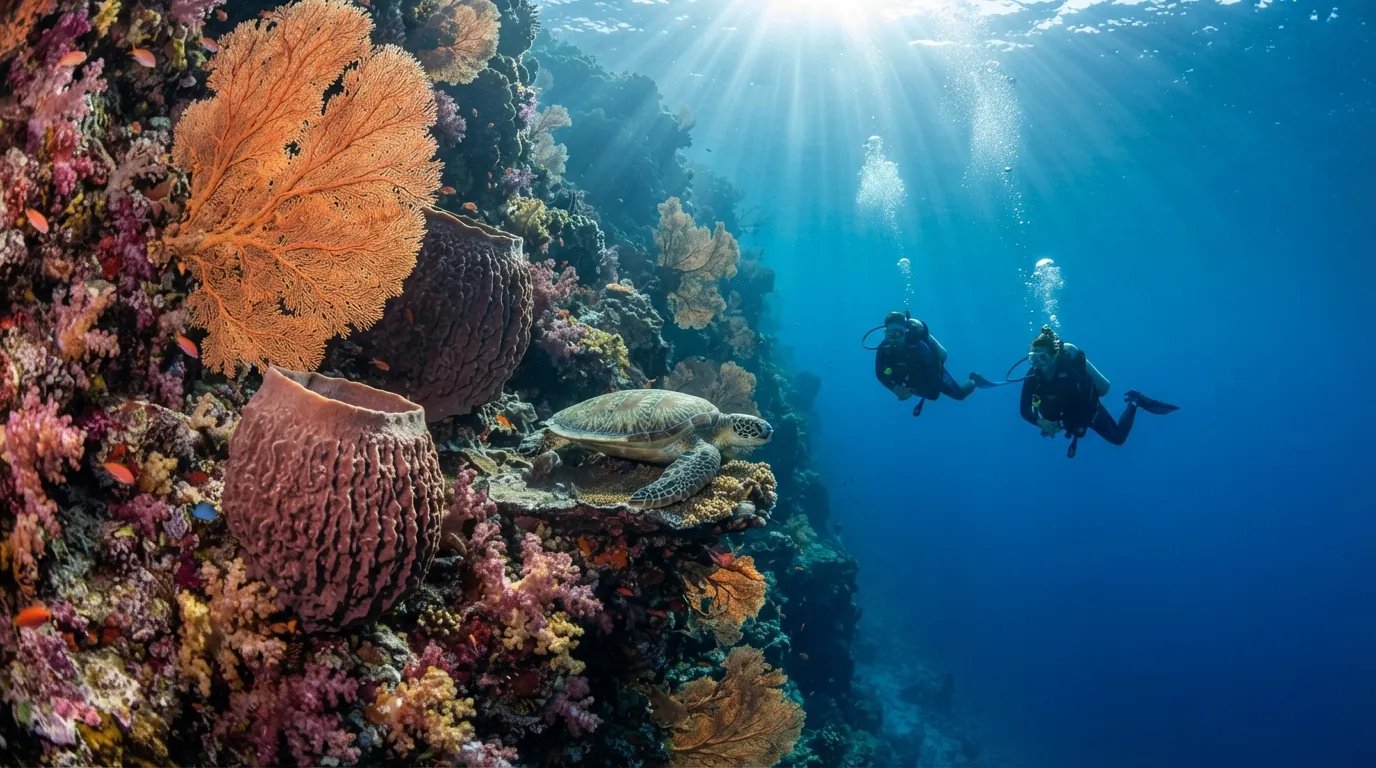
At Menjangan, shallow reef tops drop into walls that plunge beyond recreational depth. Large sea fans, barrel sponges and soft corals cover the face. Turtles rest on ledges, and schools of fish hang in the blue.
Visibility often reaches 20 to 30 meters, so the whole wall opens up in front of you. Currents usually stay gentle, which lets you drift slowly and enjoy the view.
What You See in the Muck at Secret Bay
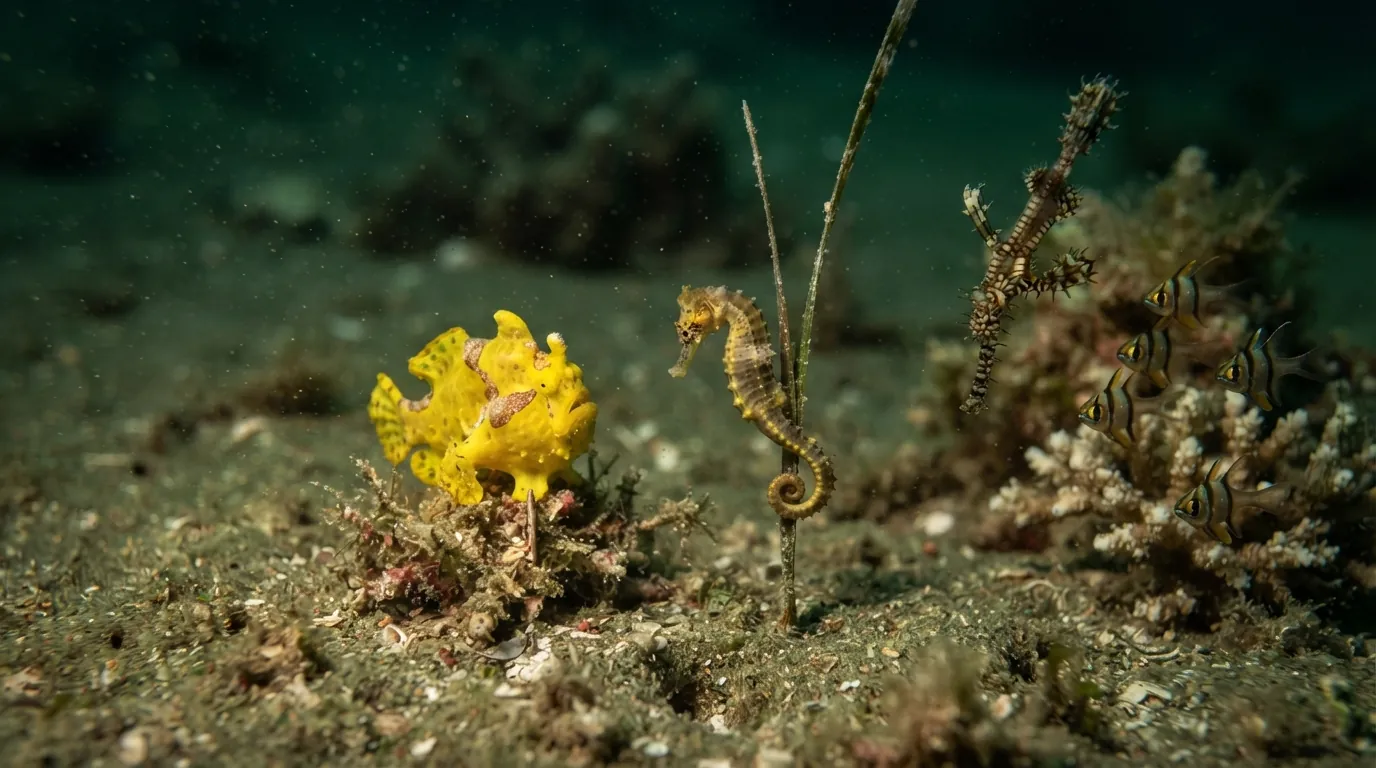
Secret Bay feels like a hidden nursery. The water stays shallow, mostly between 3 and 12 meters, over sand, rubble and seagrass. At first glance it looks empty. However, a slow search reveals frogfish, seahorses, ghost pipefish and cardinalfish.
The bay also hosts juvenile fish, small octopus and colorful nudibranchs. Because the water stays cooler and murkier than at Menjangan, visibility often drops below 10 meters. Still, macro fans happily trade clear water for rare critters.
Skill Level for Each Dive
Menjangan suits most certified divers. Beginners can stay near the shallow reef top, while experienced divers explore deeper sections. Good depth awareness and steady buoyancy matter most, since the wall drops away below you. Before you book menjangan island diving, ask your operator to match each site to your level.
Secret Bay looks easier because it stays shallow. In practice, it asks for very precise buoyancy. One careless fin kick stirs up the silt and ruins the view for everyone. Patience matters too, as you may spend several minutes on one patch of sand. Your guide will also time the dive with the tide, since high tide brings clearer water.
Photography: Wide-Angle Walls vs Macro Muck
Photographers should plan their gear around the site. The Menjangan walls reward a wide-angle lens, which captures divers, sea fans and blue water in one frame. Natural light also works well near the surface.
Secret Bay, on the other hand, calls for a macro lens and good strobes or a focus light. Small subjects sit still, so you have time to compose shots. Many underwater photographers rate it as one of Bali’s best macro sites.
Wall Diving vs Muck Diving at a Glance
For quick reference, the table below compares both dive styles side by side.
| Factor | Menjangan Walls | Secret Bay Muck |
|---|---|---|
| Scene | Steep coral walls, open blue water | Sand, rubble and seagrass |
| Typical depth | 5 to 40 meters | 3 to 12 meters |
| Visibility | Often 20 to 30 meters | Lower, often under 10 meters |
| Main sightings | Sea fans, sponges, turtles, fish schools | Frogfish, seahorses, pipefish, cardinalfish |
| Key skill | Depth and buoyancy control | Very precise buoyancy and patience |
| Camera setup | Wide-angle | Macro |
| Timing | Morning, calm water | High tide |
How to Combine Both in One Trip
Next, plan your days around the tide and the light. A simple two-day plan works well:
- First day: two morning dives on the Menjangan walls, when the water is calm and clear
- Second day: drive west to Gilimanuk and dive Secret Bay at high tide
- Extra time: add a night dive or a second muck dive if your schedule allows
If you travel with non-divers, they can enjoy Menjangan Island snorkelling on the same boat while you dive the walls.
Final Thoughts on Wall Diving vs Muck Diving
Ultimately, both styles deserve a place on your dive list. Menjangan delivers the wow factor of big walls and clear water. Secret Bay, in turn, rewards slow, careful divers with creatures few people ever see. Together, they show just how much variety north-west Bali packs into one short stretch of coast. Pemuteran makes a practical base for both, and many divers book pemuteran diving packages there, then add Secret Bay as a separate day.
Frequently Asked Questions
Is Secret Bay good for beginner divers?
It can be, since the water stays shallow. However, low visibility and silty bottoms make good buoyancy important, so beginners should dive with an experienced guide.
When is the best time to dive Secret Bay?
Dive at high tide. The extra water brings better visibility and calmer conditions. Ask your operator to check the tide table before you book.
Can I dive Menjangan and Secret Bay on the same day?
Yes, if the tides line up. Many divers, however, prefer separate days, with Menjangan in the morning and Secret Bay timed to high tide.