

channel
daily
in the bay
you are inside
A mangrove tour that finishes facing the volcanoes of Java
This mangrove tour in Banyuwedang runs five kilometres of channel by jukung, the narrow outrigger canoe local fishermen have always used. It leaves at four in the afternoon and comes out into the open bay in time for sunset, with the volcanoes of East Java on the horizon across the strait.
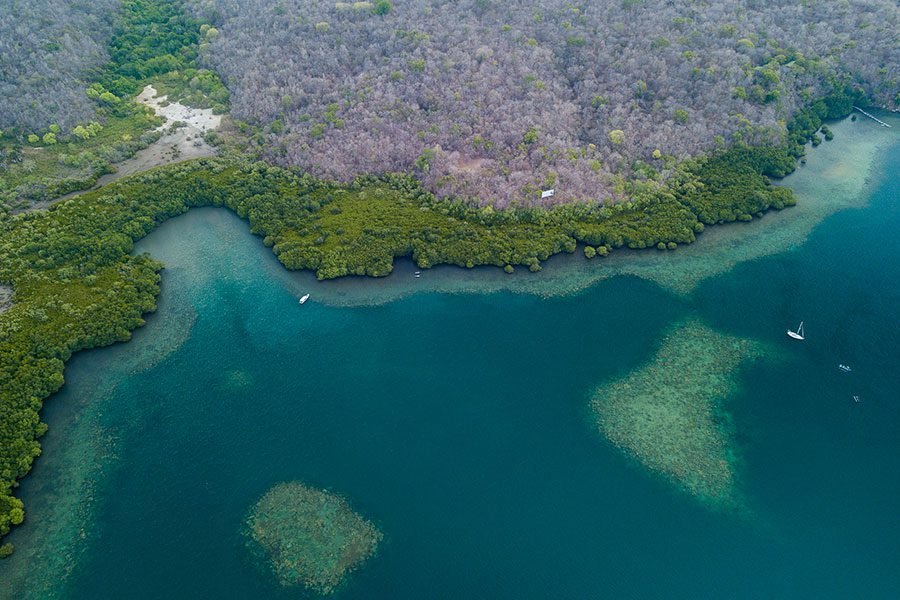
Banyuwedang sits on the eastern edge of West Bali National Park. The bay is shallow, sheltered and lined with mangrove, which makes it one of the better places on this coast for water birds. Grey macaques work the tree line, and natural hot springs give the place its name.

Inner channels
Narrow water between the mangrove stands, where the jukung earns its keep. Prop roots close on both sides and the noise of the coast road disappears.
Mudflats and margins
Herons and egrets work the edges as the tide drops. Kingfishers hunt from exposed branches, and you are close enough to watch them dive.
Hot spring shore
Natural hot springs rise along this shoreline, which is where Banyuwedang gets its name. Your guide points them out as you pass.
Open bay at sunset
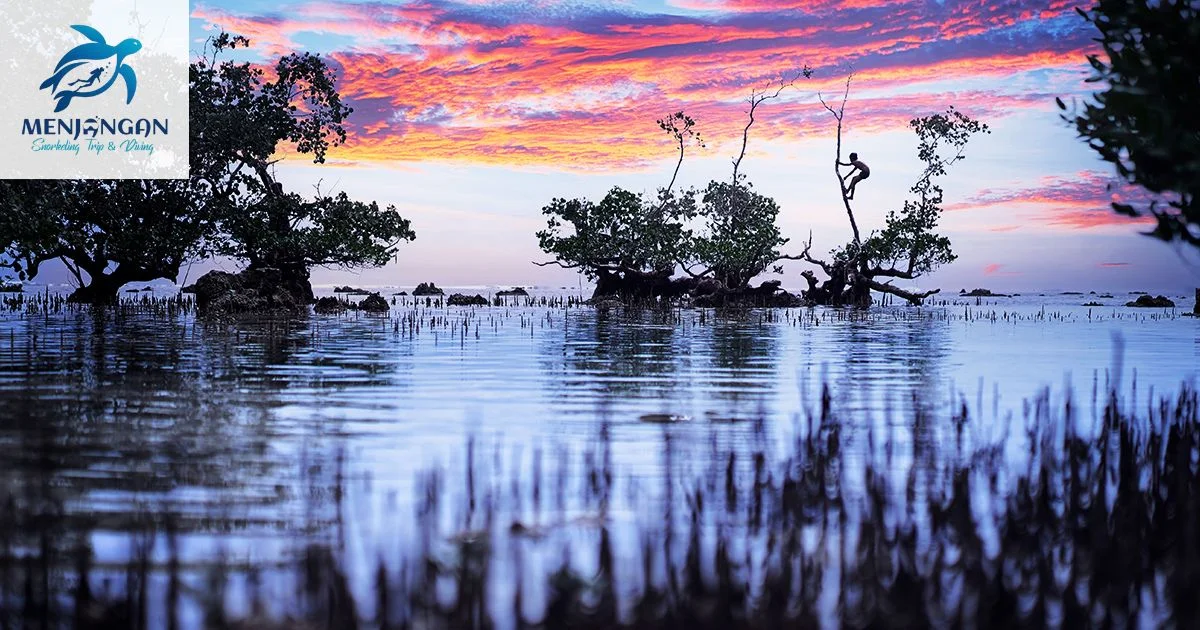
The channels give out into Banyuwedang Bay for the last stretch. Clear evenings put the volcanoes of East Java on the skyline behind the sun.
The sunset run
The mangrove tour leaves at 4 PM so the channels are done in good light and the open bay is reached as the sun drops.
The route
Departs 4 PM- StartBanyuwedang, into the mangrove channels by jukung
- MiddleFive kilometres of channel, mudflats and shoreline
- WildlifeWater birds feeding, macaques along the tree line
- FinishOut into the open bay for sunset over the strait
Paddling is easy and the water is sheltered. The guide sets the pace and stops wherever there is something to look at.
Ask about this tripIn the rate
Included- TransportReturn pick up and drop off from your hotel in the Pemuteran or Menjangan area
- GuideEnglish speaking guide for the whole trip
- BoatTraditional jukung and all equipment
- WaterMineral water
Banyuwedang sits on the park boundary, so tell us when you book and we will confirm whether a park permit applies to your date. Our permits and fees guide explains how the system works.
Channel, shoreline, open water
The trip works inward through the mangrove, then back out into the bay for the last of the light.
The jukung
Traditional outrigger canoe
Five kilometres of channel
The channels
Root zone and mudflats
Water birds and macaques

Banyuwedang Bay
Sunset over the strait
Volcanoes of Java on clear evenings
The bay is worth seeing twice in one trip
Mangrove birds feed hardest at the ends of the day. Through the middle of the afternoon most of them sit still in shade, and the light is flat and hard on the water.
A 4 PM departure puts you in the channels as the birds start moving and in the open bay as the light goes. If you would rather be out at first light instead, the Gilimanuk mangrove tour runs a sunrise departure through the widest mangrove forest in the park.
What to bring
- RepellentThe most useful thing you can pack. Mangrove at dusk means mosquitoes.
- Long sleevesLight and loose. Better than repellent alone once the sun drops.
- CameraThe sunset over the strait is the shot. Keep it in a dry bag between frames, since a jukung sits low.
- BinocularsWorth bringing for the herons and waders out on the mudflats.
- LayerIt cools quickly on the water once the light goes.
- FootwearSandals you do not mind getting wet. You step in and out from soft ground.
What the bay holds
Fifteen species our guides point out regularly on this mangrove tour. Nothing is guaranteed, and the wader list is longest when migratory birds pass through.
Nothing matches that search.
Birds
7 speciesMangroves
4 speciesOther wildlife
4 speciesBanyuwedang is also the harbour the Menjangan boats leave from, so this bay is where most guests start their reef day. Details on our Menjangan snorkeling trips.
Common questions
The trip departs at 4 PM, timed so the channels are covered in good light and the open bay is reached at sunset. Hotel pick up in the Pemuteran or Menjangan area is included.
The water is sheltered and the pace is easy, and your guide handles the boat. Tell us if anyone in your group would rather not paddle at all.
Gilimanuk covers the widest mangrove forest in the park and runs at sunrise or mid afternoon. Banyuwedang is a five kilometre sunset run that finishes in the open bay facing East Java. If you want birds, take Gilimanuk at sunrise. If you want the light, take this one.
On a clear evening, yes. They sit across the Bali Strait behind the sunset. Cloud and haze can hide them, particularly in the wet season, so treat it as a bonus rather than a promise.
Yes, and a dusk trip through mangrove is when they are worst. Repellent and long sleeves make a real difference here.
Yes. The bay is shallow and sheltered and the pace is slow. Tell us the ages when you book so we can size the boat and have the right vests on board.