Most divers choose a Bali dive site the same way they choose a restaurant, by name recognition. Nusa Penida and the USAT Liberty dominate the search results, so that is where people book, sometimes with twelve logged dives and a rented wetsuit. Bali rewards a different approach. The island packs sheltered coral walls, a shallow shipwreck, volcanic slopes and serious current channels into a few hours of driving, and the gap in difficulty between them is wider than most trip planners admit. Here is how the main regions actually rank by skill level, and which certification each one really asks for.
What Makes a Dive Site Easy or Hard
Difficulty in Bali comes down to four things, and depth is the least important of them.
- Current. The dividing line. Mild drift is enjoyable. Down currents and washing machine effects require training and calm decision making.
- Entry and exit. A giant stride off a stable boat is not the same as walking over loose cobblestones through shore break carrying a tank.
- Buoyancy demands. Wall dives punish poor buoyancy control because there is no bottom to catch you.
- Temperature and thermoclines. Sudden drops to 20 degrees Celsius or lower affect air consumption and comfort more than divers expect.
Menjangan Island: Open Water Certified and Up
Menjangan is the gentlest serious diving in Bali. The island sits inside West Bali National Park in a channel sheltered from open swell, which keeps conditions calm across most of the year. Visibility regularly runs 20 to 30 metres in dry season, currents are usually mild, and the reef top starts around five metres so your safety stop happens over live coral rather than empty blue.
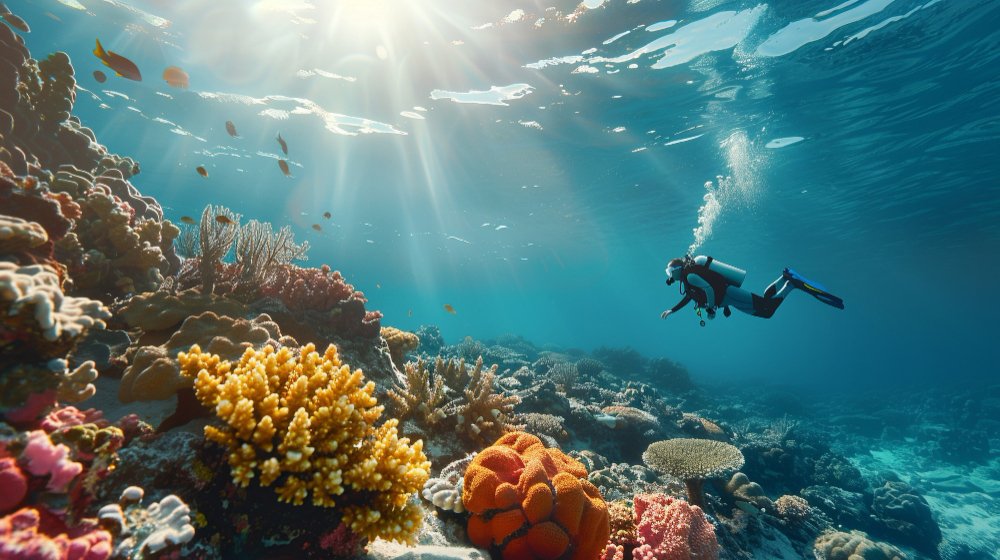
The signature feature is the wall. Vertical drop-offs plunge from three metres down past forty, covered in gorgonian fans, barrel sponges and soft coral, with overhangs and small caverns along the way. Newly certified divers can stay shallow at twelve metres and still see the entire structure. The Anchor Wreck sits deeper at around forty five metres and is strictly for advanced and technical divers, which makes the region unusual, since it serves both ends of the experience range without forcing beginners into conditions they cannot handle.
Tulamben: Open Water With a Few Dives Logged
The USAT Liberty is the most dived site in Indonesia for good reason. It lies parallel to shore in five to thirty metres, close enough that snorkelers see the shallow end and new divers can explore the bow without breaching depth limits. Marine life is dense: bumphead parrotfish at dawn, garden eels, ghost pipefish and a resident population that has colonised the hull since 1963.
The catch is the entry. You walk in over loose volcanic cobblestones, in full kit, sometimes through surge. It is manageable but genuinely awkward for a first ocean dive after certification, and porters carrying tanks is standard practice for a reason. Penetration of the wreck interior requires wreck training. Stay outside and it is a comfortable Open Water dive.
Amed: Ideal for Building Experience
Amed is the region divers skip and then wish they had not. Jemeluk Bay, Lipah and Bunutan offer gentle black sand slopes running from five to thirty metres, a small Japanese wreck sitting in six to twelve metres, and coral restoration structures that attract dense macro life. Currents are light, entries are calm, and the pace is unhurried.
It is the best place in Bali to log the dives between certification and confidence. It is also where macro photographers spend their time, since the slopes hold nudibranchs, frogfish and pygmy seahorses.
Nusa Penida: Advanced Open Water Territory
Penida is the one that catches people out. Manta Point is relatively shallow at ten to twenty metres but exposed to surge and swell, and the sites around Crystal Bay and Blue Corner run strong, unpredictable current including down currents that pull divers deeper fast. Water temperature drops sharply, sometimes to 18 degrees, especially during mola mola season from July to October.
Advanced Open Water plus drift experience is the honest minimum for the current sites. Manta Point alone is achievable for competent Open Water divers on a calm day with a good guide. Blue Corner should be treated as expert only.
Bali Dive Sites Compared
| Region | Recommended level | Depth range | Current | Entry | Signature |
|---|---|---|---|---|---|
| Menjangan Island | Open Water and up | 5 to 40 m | Mild | Boat | Coral walls, gorgonian fans, Anchor Wreck for advanced |
| Tulamben | Open Water, few dives logged | 5 to 30 m | Mild | Shore, cobblestones | USAT Liberty wreck |
| Amed | Open Water, all levels | 5 to 30 m | Light | Shore or short boat | Macro life, Japanese wreck |
| Nusa Penida | Advanced Open Water | 10 to 40 m | Moderate to very strong | Boat | Mantas, mola mola, drift |
Matching a Site to Your Certification
If you were certified in the last year and have fewer than twenty dives, start in the north west or east and leave Penida for a later trip. Calm conditions let you work on buoyancy and air consumption instead of managing current, and the reward is not smaller. Many divers rate the walls as the best diving in bali precisely because the clarity and coral health outclass the more famous sites.
Advanced divers get the reverse benefit. The same region offers deep wall profiles and the Anchor Wreck, so a mixed group with different certification levels can dive the same day trip without anyone being left on the boat.
Where to Build Dive Numbers Before Penida
Logging dives in sheltered water before tackling current sites is the sensible progression. The mainland coast opposite Menjangan offers exactly that, and pemuteran diving at the Biorock coral restoration site gives you shallow, calm, structure rich dives that build skills while being genuinely interesting rather than just practice.
Final Thoughts
Ranking Bali’s dive sites is less about which is best and more about which is honest for your logbook right now. Penida rewards experience and punishes overconfidence. Tulamben delivers a world class wreck with a slightly awkward walk. Amed builds skills quietly. And the north west offers the clearest, calmest walls on the island, which is why a Menjangan Island Tour works equally well as a first ocean dive after certification and as a deep wall day for divers with hundreds of dives behind them.
Frequently Asked Questions
A: Advanced Open Water with drift experience for the current sites. Some operators accept Open Water divers at Manta Point only, in calm conditions, with a private guide.
A: Yes. Discover Scuba programs and Open Water courses run year round, and the sheltered north west and Amed coasts are well suited to training dives with mild conditions.
A: April to October gives the calmest seas and best visibility. Mola mola season peaks July to October around Penida, though that also brings the coldest water and the biggest crowds.